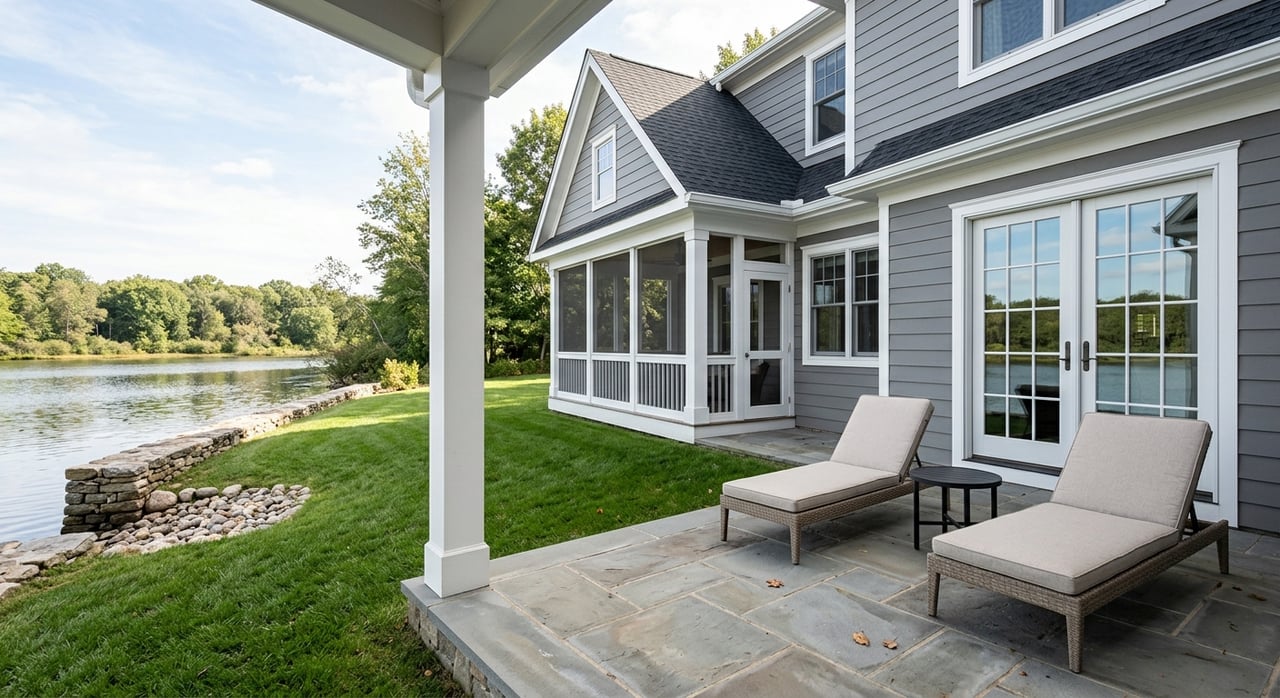
Preparing Your Moseley Lakefront Home To Sell
April 16, 2026
April 16, 2026
Wondering how to prepare your Moseley lakefront home for sale without leaving money on the table? Selling a waterfront property is different from selling a typical suburban home, because buyers are looking at the shoreline, the view, permits, and risk just as closely as they look at the kitchen or primary suite. If you want a smoother sale and a stronger first impression, the right prep work can help you reduce buyer concerns before your home even hits the market. Let’s dive in.
A lakefront home in Moseley sits in a more specialized segment of the Chesterfield market. While Chesterfield County’s overall housing market has remained relatively competitive, waterfront homes are usually priced and evaluated within a smaller niche based on access, views, condition, documentation, and risk.
That matters because buyers do not see "lakefront" as an automatic premium. Research shows lakefront homes often command a premium, but that premium can vary significantly depending on the type of water, the property’s features, and how concerns like flood risk affect buyer perception. In other words, your home’s value story needs to be supported, not assumed.
In Moseley, preparing a lakefront property often starts outside. Chesterfield County identifies Resource Protection Areas as 100-foot natural corridors along lakes and reservoirs, including Swift Creek Reservoir, which the county describes as a 1,700-acre public water supply reservoir.
These rules are important for sellers because buyers may ask early questions about what can and cannot be done near the water. Chesterfield notes that these protected areas help prevent erosion, reduce runoff, and protect water quality, so even small shoreline changes may matter when you are getting ready to list.
If you have cleared vegetation for a view or adjusted landscaping near the water, it is smart to review whether that work affected the protected buffer. Disturbances in an RPA can trigger restoration or replacement planting requirements, and the county does not approve invasive species for restoration plans.
This does not mean every waterfront property has a problem. It does mean that gathering records and understanding the current condition of the shoreline can help you answer buyer questions with more confidence.
If your property includes a dock on Swift Creek Reservoir, documentation should be part of your pre-listing checklist. Chesterfield requires a license agreement, RPA encroachment approval, and a building permit for docks, and the county’s dock application process involves multiple approvals and supporting documents.
For buyers, a dock is not just an amenity. It is also a compliance question. Having your paperwork ready can make the property feel more complete, more transparent, and easier to evaluate.
Waterfront buyers tend to be detail-oriented, and for good reason. A buyer may love the view, but they are still going to ask how the property functions, what it costs to own, and whether there are hidden issues tied to the lot.
A helpful framework from the University of Wisconsin Extension waterfront guide shows that buyers often evaluate water quality, shore quality, regulations, surrounding area, nearby properties, costs, and how the water looks during different times of year. That is a useful reminder that your sale depends on more than interior design.
One of the first questions many buyers will ask is whether the home sits in a flood zone. The official place to verify that is FEMA’s Flood Map Service Center, where flood maps can be checked by address.
Even if your property is not in a high-risk zone, buyers may still ask about flood exposure and insurance costs. FEMA notes that flood risk exists outside high-risk areas, and FloodSmart reports that nearly one-third of National Flood Insurance Program claims from 2014 to 2024 came from outside high-risk zones.
Most buyers will also want to understand what a homeowners policy does and does not cover. According to FloodSmart, most homeowners insurance policies do not cover flood damage.
That makes it helpful to gather any relevant insurance information in advance, including current policy details or prior flood insurance history if applicable. Clear information does not just answer questions. It can also reduce uncertainty during negotiations.
If your lakefront property uses a septic system, a pre-listing inspection can be especially helpful. The EPA advises homebuyers to have a septic system inspected before purchase, which means many buyers and inspectors will be looking closely at that system anyway.
By inspecting and servicing it before listing, you may be able to avoid last-minute repairs or contract delays. It also gives you a chance to present the home as well-maintained from day one.
The best pre-listing improvements are usually the ones that remove uncertainty. For Moseley lakefront homes, that often means focusing less on trendy cosmetic updates and more on the features that affect usability, maintenance, and compliance.
A pre-listing home inspection can be a strong starting point. The National Association of Realtors notes that a pre-listing inspection can help sellers identify roof, plumbing, electrical, and other issues before they surprise a buyer.
For a lakefront home, the exterior often carries extra weight. Buyers are paying attention to drainage, shoreline stability, outdoor living spaces, decks, patios, windows, and the way the home connects to the water.
That is why smart refreshes can go a long way. Fresh paint, updated lighting, and polished outdoor spaces can improve the first impression, as long as any work near the shoreline stays compliant with county rules.
Maintenance records can be surprisingly persuasive. If you have recent servicing for septic, roof work, HVAC maintenance, dock documentation, or drainage improvements, keep those records organized and easy to share.
For a waterfront home, paperwork often supports value just as much as presentation does. Buyers want confidence that the home has been cared for and that the waterfront features are properly documented.
When you are selling lakefront property, the goal is not only to make the home look beautiful. It is to help buyers understand how the home lives and how the waterfront setting adds to that experience.
According to NAR’s 2025 staging report, 83% of buyers’ agents said staging made it easier for buyers to visualize a home as their future residence. The same report found that the living room, primary bedroom, and kitchen were among the most important spaces to stage.
In a lakefront home, buyers are naturally drawn to light, windows, and any room with a water view. Your furniture placement, decor, and traffic flow should support those sight lines instead of blocking them.
That may mean simplifying a room, reducing oversized furniture, or removing items that distract from the view. The goal is to let buyers feel the connection between the interior and the outdoor setting.
Your deck, patio, and waterfront-facing yard should feel usable and inviting. Buyers are not just purchasing square footage. They are also evaluating how they might spend time outside.
Simple updates like clean seating areas, tidy landscaping, washed windows, and a polished entry to the backyard can help the property feel complete. For waterfront homes, those spaces often help justify the premium.
Great marketing matters for any listing, but it matters even more for a specialized property. Many buyers decide whether to visit a lakefront home based first on the online listing, so your photography and video need to explain the setting clearly.
NAR notes that drone photography can help showcase landscape, yard, rooflines, and surrounding views. For a lakefront home, that can be especially useful in showing how the lot relates to the water and what the outdoor spaces actually offer.
A sweeping aerial image is helpful, but it should not be the whole story. Buyers also want to know whether the home’s layout fits their needs.
That is where strong interior photography, video, and virtual tours can help. Clean, bright visuals that show both the view and the floor plan make it easier for buyers to picture how the property works in real life.
One of the biggest mistakes in waterfront selling is relying too heavily on broad market averages. County-level data provides useful context, but it cannot fully capture the differences between a standard subdivision home and a lakefront property with a specific shoreline, view corridor, dock status, or insurance profile.
Instead, pricing should be anchored to the smallest relevant set of comparable homes. In Moseley, that usually means recent lakefront or water-access sales with similar access, lot quality, condition, documentation, and risk factors.
Research on waterfront housing shows that lakefront homes can sell for meaningful premiums, but the premium is not automatic or uniform. It often reflects the quality of the view, the type of access, shoreline condition, and how buyers perceive flood or insurance-related risk.
That is why preparation matters so much. The more complete and well-documented your home feels, the easier it is to support pricing and reduce requests for concessions later.
Selling your Moseley lakefront home is not just about putting it on the market. It is about presenting a property that feels well-cared for, well-documented, and easy for buyers to understand.
When you address shoreline compliance, gather dock and system records, prepare for insurance and flood questions, and stage the home around the view, you put yourself in a stronger position from the start. If you are getting ready to sell and want a marketing-first plan built for a property like yours, connect with Pretty Properties LLC to request a free home valuation.
Stay up to date on the latest real estate trends.



Partner with a team that delivers clarity, strategy, and commitment elevating your journey with a level of service you can feel.