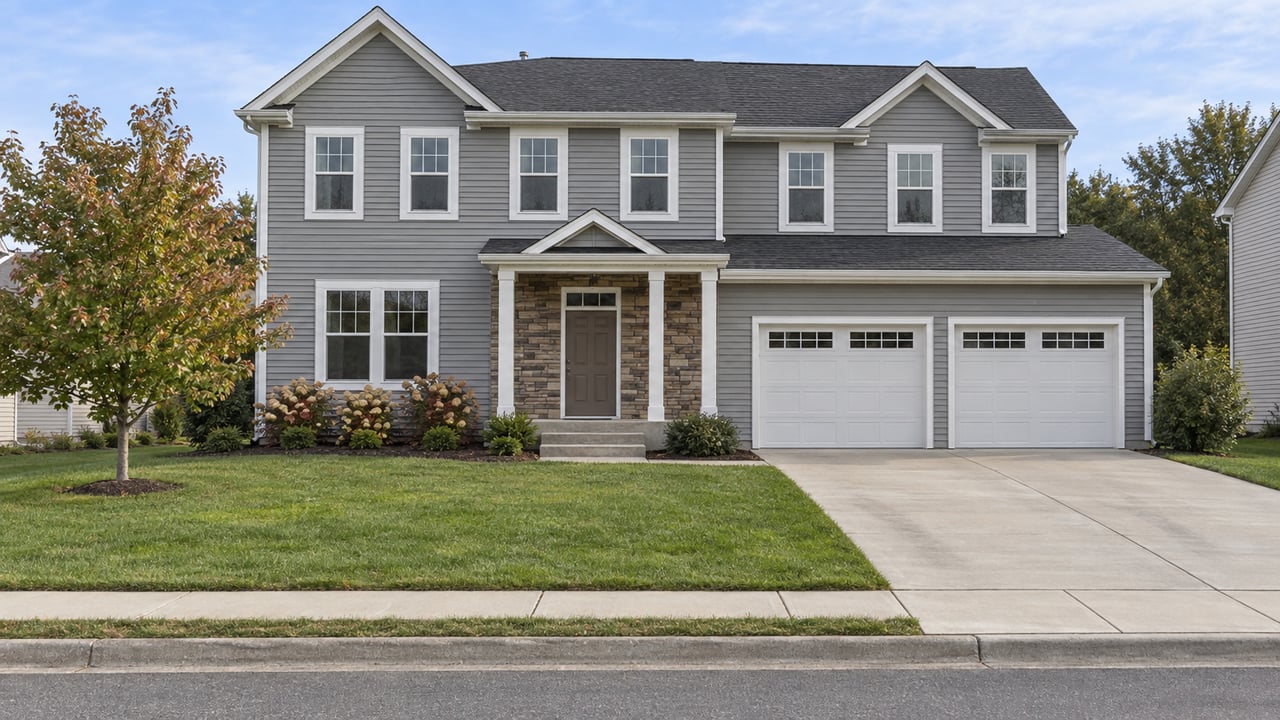
In Moseley, Some New Homes Come With a Road Bill. Here's How to Find It Before You Sign
October 8, 2026
October 8, 2026
"It doesn't impact or use up any of our debt capacity in any way. It's simply an assessment paid by landowners in these particular districts."
Interim County Administrator Matt Harris said that to the Chesterfield Board of Supervisors this summer while explaining how a new Moseley development would pay for its share of Hull Street Road. The landowners he meant are mostly not there yet. They are the people who will buy single-family homes at Sawmill Station over the next several years. Each of them will inherit a share of a road loan, paid back through an annual special assessment that runs with the land. That obligation lands after the mortgage and the HOA dues are already in the budget.
A Community Development Authority, or CDA, is how Chesterfield has paid for some of the roads around Moseley's biggest master-planned communities. The mechanism is legal, it's recorded, and it's public. It is also something Virginia's standard seller disclosure form says nothing about.
On July 22, 2026, the Board of Supervisors voted 5-0 to create the Sawmill Station CDA. The district covers D.R. Horton's planned community on a 131-acre site that includes 18410 and 18910 Hull Street Road. The plan calls for 860 homes in a mix of townhomes, apartments, single-family homes and duplexes, with commercial tracts facing Hull Street and an entrance at the Doss Road intersection.
The ordinance lets the CDA issue bonds in one or more series. Total principal is capped at $9,000,000, and each series has to mature within 30 years of its issue date. A county memo estimated about $6 million in proceeds for transportation work. That covers a third travel lane on Hull Street along the development's frontage, plus turn lanes, sidewalks and traffic signal improvements.
Here is who repays those bonds. The county's May 27 agenda summary says Sawmill Station "would levy an annual special assessment on single-family properties in the community." The assessment on the commercial areas would be paid by D.R. Horton. The debt belongs to the CDA. The county isn't liable for it, and that is exactly why it doesn't count against Chesterfield's borrowing limits.
This changes the math for a buyer. The road improvement is real, and it will be shared by everyone who drives that stretch of Route 360. The repayment, though, is assigned to specific parcels inside the district line.
Sawmill Station sits beside Taylor Ridge, a 677-unit project planned by Crescent Group, the development arm of Henrico-based Cornerstone Homes, on a 116-acre site at 18200 and 18400 Hull Street Road. Taylor Ridge's approved zoning includes proffered transportation improvements paid for by the developer, among them a widening of Hull Street Road along its frontage. As of July 2026, no CDA had been publicly proposed for Taylor Ridge.
Both developments sit on the same corridor and both are widening their frontages. One pays for its road work through developer proffers. The other repays bonds through an assessment that homeowners will carry for years.
| Sawmill Station | Taylor Ridge | Magnolia Green | |
|---|---|---|---|
| Location | 18410 & 18910 Hull Street Road | 18200 & 18400 Hull Street Road | Moseley, along Route 360 and Woolridge Road |
| Planned homes | 860 | 677 | Master-planned community |
| How frontage or area road work is funded | CDA bonds repaid by annual special assessment | Developer-paid proffers, no CDA publicly proposed as of July 2026 | CDA bonds repaid by special assessment |
| Who carries the assessment | Single-family properties; D.R. Horton for commercial areas | Not applicable | Landowners in the district |
| Key date | CDA created July 22, 2026 | Zoning approved spring 2026 | CDA created 2007, bonds sold April 9, 2015 |
Developers price their homes against the market, and they don't add a line to the list price for how the road got built. So two homes with similar base prices a few hundred yards apart can come with different carrying costs. The difference shows up on a recurring bill, not on the listing.
Sawmill Station wasn't designed from scratch. The county's summary calls it "modeled after the Magnolia Green CDA."
The Lower Magnolia Green Community Development Authority was created in 2007 to help finance transportation infrastructure for the master-planned community. The economic downturn delayed construction. The CDA sold $28,070,000 in bonds on April 9, 2015, and the developer, iStar, contributed another $3,000,000. The county agreed to build the road improvements and oversee them like any other county project. In October 2017, staff told the board that construction was scheduled to begin in May 2018 and finish by May 2020. The development agreement specifically required bond-funded work at the Woolridge Road and Otterdale Road intersection and gave it priority over other Otterdale Road work.
So it took about eight years to go from creating the district to selling the bonds, with construction planned after that. By 2026, the households buying into Magnolia Green are often second or third owners. They are repaying a road financing plan that was approved before their home was built. The bonds also run on a long schedule. Public bond records we reviewed don't agree on the final maturity date, and one lists 2045. Either way, a buyer today should assume the obligation runs for years beyond their closing.
This is where the friction comes in during a transaction. Under Va. Code § 55.1-703, Virginia sellers give buyers a residential property disclosure statement. For the version in effect through the end of 2026, item 12 says the owner "makes no representations with respect to whether the property is subject to a community development authority." The same form advises buyers to do their own due diligence before settlement. That includes checking whether the CDA ordinance has been recorded in the circuit court land records for the parcel. You can read the statute's text on the Virginia Code site.
Three more rules shape what you will and won't be told:
The details that matter most for your budget are the ones we couldn't find in any public document we reviewed. That includes the current annual dollar amount per home in Magnolia Green, how Sawmill Station's assessment will be calculated by home type, whether the charge appears on the Chesterfield County tax bill or arrives separately, and whether an owner can pay it off early. Ask for these in writing:
This isn't tax or legal advice. Confirm every figure with Chesterfield County and your settlement attorney. The goal is simple: make sure the assessment is part of your monthly cost estimate before you sign.
Does a CDA assessment mean the county is in debt for my road? No. The Sawmill ordinance states that the bonds are debt of the CDA and don't pledge the county's faith and credit. The obligation is repaid by assessments on property inside the district.
Is every new community along Hull Street in a CDA? No. Taylor Ridge, right next to Sawmill Station, is paying for its Hull Street frontage widening through developer proffers, and no CDA had been publicly proposed for it as of July 2026. Check each community and each parcel on its own.
When will Sawmill Station homeowners start paying? The public record doesn't answer that yet. As of the July 22, 2026 vote, the CDA has been created with a $9,000,000 bond cap. Coverage of the vote didn't report an actual bond issuance, a per-home amount, or a billing schedule.
If you're weighing a home in Magnolia Green, Sawmill Station or another Hull Street community, the Pretty Properties team will help you get the CDA question answered in writing, with the recorded ordinance, the annual figure and the payoff terms in hand, before your offer goes in. If you own in one of these districts and are thinking about selling, request a free home valuation and we'll show you how to present the assessment clearly from the first showing.
Stay up to date on the latest real estate trends.
Partner with a team that delivers clarity, strategy, and commitment elevating your journey with a level of service you can feel.