1870 Restaurant in Midlothian: A History of Jewett-Bass Hall
September 3, 2026
September 3, 2026
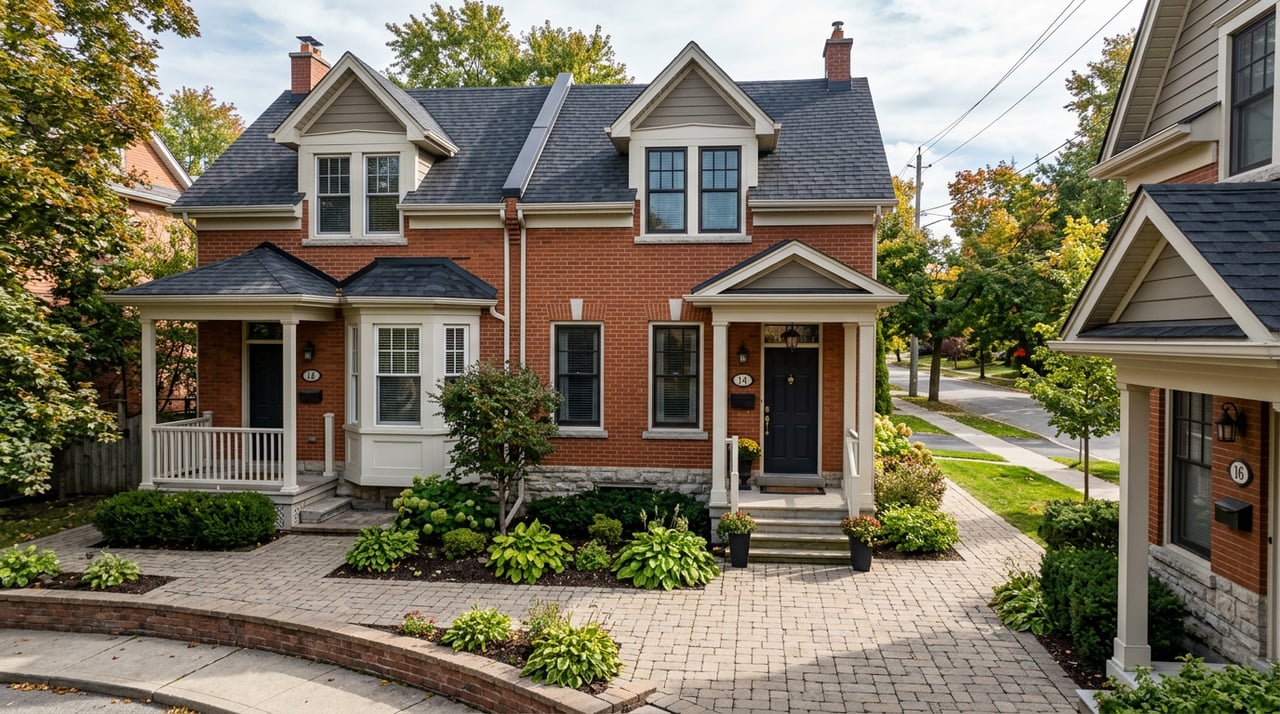
Drive down Midlothian Turnpike past Mount Pisgah United Methodist Church and you'll pass a plain, two-story brick building with a name over the door that reads simply "1870." Most people clock it as one more new restaurant in a corridor full of them, another entry on the list next to Tazza Kitchen and Bonefish Grill. What almost nobody driving by realizes is that the plain brick facade at 13310 Midlothian Turnpike is the oldest commercial building left standing in Chesterfield County, and that in the century and a half since it went up, it has never once gone dark.
That continuity is the actual story here, more than the steak.
The building is called Jewett-Bass Hall, named for the two families who ran it as a general store for most of its life. Brothers George H. and John W. Jewett built it in 1870, and it operated as Midlothian's general store from that year until the early 1950s, with the second floor used as living quarters for whoever ran the place. In the 1920s the Jewetts sold the store to a married couple, Mr. and Mrs. L. Shelby Bass, who did something that still surprises people when they hear it: alongside running the store, the Basses operated a generator and sold their excess electricity back to their Midlothian neighbors. Before Chesterfield had a public utility grid reaching this far out the Turnpike, this building was, in a literal sense, powering the neighborhood around it.
By the 1940s, Jefferson Cosby and his son had taken over store operations. Then the building's identity shifted again: it spent the 1960s and 1970s as a bicycle shop, a detail that tends to get a laugh from longtime residents who remember a very different Midlothian than the one taking shape today. A commercial kitchen went into the rear of the building in the 1980s, turning it briefly into a restaurant space of its own, before Mount Pisgah United Methodist Church bought the property in 1988 to use as Sunday School and meeting room space. The church held onto it until 2019. After that, it became a real estate office, home to Jenni Comer's firm Jenni & Co., before that business moved a few blocks away to 13510 Midlothian Turnpike.
Store. Utility. Bicycle shop. Church annex. Real estate office. The building never had a moment of vacancy long enough to make the local news, because someone was always finding a new use for it.
The most recent chapter started in October 2023, when chef David Dunlap purchased the 4,000-square-foot building and an adjacent parcel through an LLC for $850,000. Dunlap wasn't new to the neighborhood. Two years earlier, he and his wife Brittany had opened Midlothian Chef's Kitchen on Busy Street, a New American restaurant built around local, hyper-seasonal Virginia ingredients, after Brittany spotted the empty commercial space there in July 2020. Dunlap's résumé reads like a tour of American fine dining: Le Cordon Bleu's California Culinary Academy, the five-diamond El Encanto Hotel and Four Seasons Biltmore in Santa Barbara, Alain Ducasse's Adour in Washington, D.C., a Michelin-starred stint at Plume in The Jefferson Hotel, and time as Executive Sous Chef at the three-Michelin-starred Inn at Little Washington.
Dunlap told WTVR at the time that the new concept would lean into "a French-inspired steak-and-seafood house, with a heavy emphasis on French and Virginia wines." He named it 1870, for the year the building went up, and by all accounts he'd simply been eyeing the property because it sat near his own house and he'd admired it for years.
The restaurant opened in 2024. It seats 130 across two floors: a lively upstairs bar area and a quieter main dining room downstairs, plus a "speakeasy" tucked below that regulars mention almost as often as the food. A Style Weekly writer, describing a return visit with his father, said the building's stories, if the walls could talk, "would be insane." That's not hard to believe for a structure that's been a general store, a private power source, a bike shop, a church classroom, and a real estate office before it ever poured a glass of Burgundy.
If you're weighing a visit, it helps to know what you're walking into, because the reviews genuinely split into two camps. The menu runs upscale: a 15-ounce prime New York strip at $62, an 8-ounce hanger steak at $30, a Berkshire bone-in pork chop also at $30, with lobster at market price and side dishes, which the menu calls "accompaniments," running an extra $8 to $12 if you want more than one. Reviewers who caught the kitchen on a good night describe standout dishes like seared duck breast and the potato au gratin, plus a downstairs speakeasy scene that pulls a genuinely fun crowd on weekends. Others have walked away frustrated, citing a Caesar salad that didn't live up to the classic, a shrimp cocktail that felt overpriced for what arrived, or a hanger steak that came out overcooked. The menu includes technically demanding dishes, including sous-vide steaks finished to order rather than simple grill-and-serve.
If you're planning to go, a few practical notes locals have already worked out. Weeknights, particularly Tuesday through Thursday, or an early seating on any night, get you the quieter version of the space, good for a real conversation. Friday and Saturday nights are a different animal entirely, loud, crowded, and clearly built for celebration rather than a quiet dinner. Dress runs business casual, which fits the restaurant's own description of itself as "casual elegant." Reservations matter most on weekends. Happy hour runs Monday through Friday from 4 to 6 p.m., a lower-stakes way to see the space and decide for yourself which camp you land in.
Midlothian Turnpike has changed enormously over the past few decades. Strip centers have gone up and come down. Chain restaurants have rotated through outparcels. What's easy to miss, especially if you've only lived here a few years, is that almost none of the corridor's older building stock survived that churn. Jewett-Bass Hall did, not because anyone set out to preserve it as a landmark, but because it kept being useful. A general store gave way to a bicycle shop because someone needed a bicycle shop. A bicycle shop gave way to a church annex because a growing congregation needed classroom space. A church annex gave way to a real estate office, and a real estate office gave way to a restaurant, because each time, someone looked at that plain brick building and saw exactly what the neighborhood needed next.
That's a different kind of history than the plaque-and-preserve version you get in a lot of small towns. It's a building that earned its longevity by staying flexible, not by staying frozen. The next time you're sitting in the downstairs speakeasy or catching happy hour upstairs, it's worth remembering that you're not just in Midlothian's newest steakhouse. You're in the one building on the Turnpike that has quietly been serving this neighborhood, in one form or another, since Ulysses S. Grant was in the White House.
If you're curious about what else is changing in the neighborhoods around Midlothian, from new development to the pace of local sales, Pretty Properties keeps a close eye on the corridor and the community around it. Reach out anytime you want a local read on what's happening beyond the dinner menu.
Stay up to date on the latest real estate trends.
Partner with a team that delivers clarity, strategy, and commitment elevating your journey with a level of service you can feel.