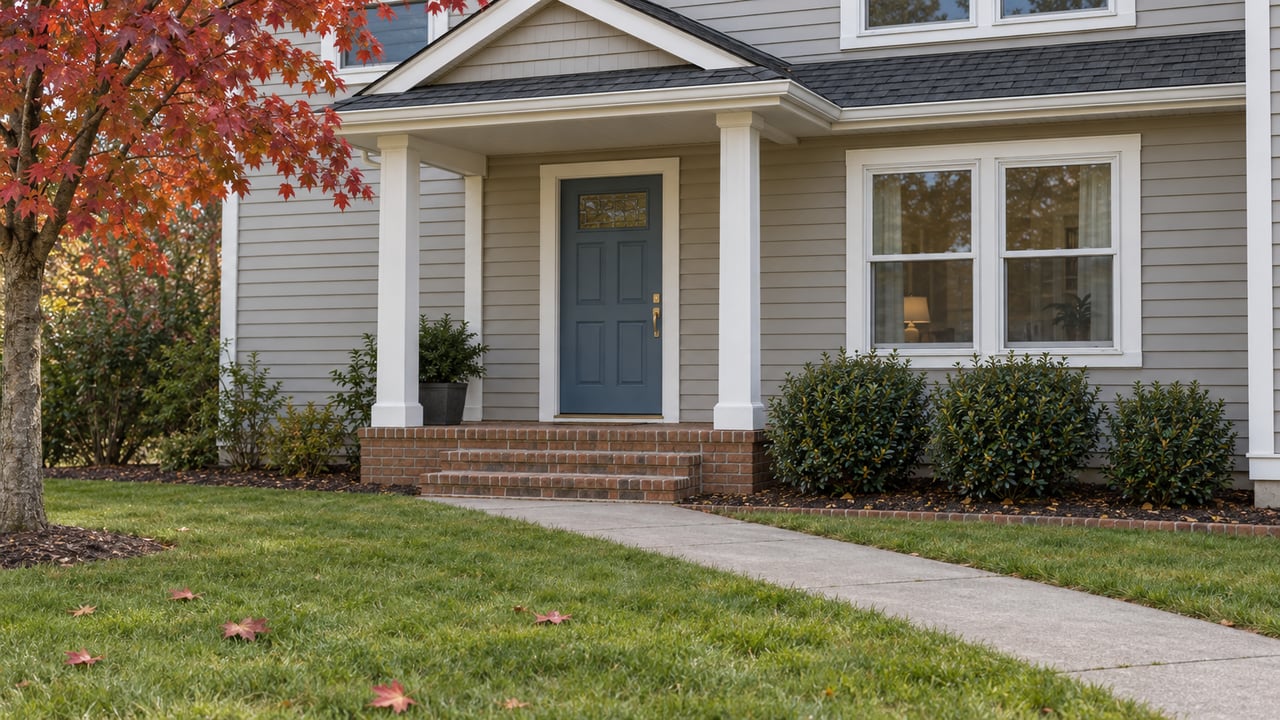
Brandermill Just Rewrote Its Design Rulebook. Sellers Will Meet It First at the Resale Inspection.
November 5, 2026
November 5, 2026
On October 19, 2026, the Brandermill Community Association adopted a third restatement of its Residential Design Standards. The last full restatement was adopted on April 9, 2007. In the years between, the board only revised individual sections, such as solar panels in 2014, mailboxes in 2023, walkways in 2024 and EV chargers in 2025. For most homeowners, a new rulebook only matters if they plan to build a deck or repaint. For anyone selling a Brandermill home in the next year, it matters right away, because this is the document the association's inspector will hold up against your house.
Virginia law makes the seller responsible for getting the association's resale certificate and delivering it to the buyer. Once the association receives a written request, it generally has 14 days to deliver it, under Virginia Code § 55.1-2309. The certificate also has to address any written notice of violations involving alterations or improvements, according to § 55.1-2310.
In Brandermill, that request starts more than paperwork. The BCA's resale certificate page explains that a Compliance Specialist inspects the property, photographs the entire site and writes a violation report. Items on that report do not hold up closing. Any that are unresolved "are transferred to the purchaser."
The buyer receives the association's report of what is out of compliance along with the packet, and any unresolved item becomes theirs to fix after closing. Each item turns into a repair the buyer can price into a request or an offer. The packet itself costs $225 by email, with a $50 rush surcharge, and a re-inspection is optional.
The Brandermill Residential Design Standards spell out which rulebook applies:
"Properties must comply with the Brandermill Residential Design Standards at the time of resale."
As of October 19, that means the 3rd Restatement.
The new standards include a section on what they call legacy improvements. Work the ARB approved before the current revision date counts as compliant even if the rules have changed since then. That protection has two limits. If you can't show that you or a previous owner got ARB approval for something that doesn't meet the standards, the association needs that documentation. And once a legacy item needs changes or repairs, the standards say "the structure will need to be brought into compliance with the current Standards."
For an older house, that clause decides a lot. Picture a deck, fence or front walk built decades ago under an approval nobody can find. It is exposed twice: once when the inspector photographs it, and again if you repair it before listing. Work that went up without approval is also "still subject to review at any time" the association becomes aware of it, and the ARB says the stage of construction does not affect its decision. Your first call before listing should be to the BCA office, to ask what approvals are on file for your address.
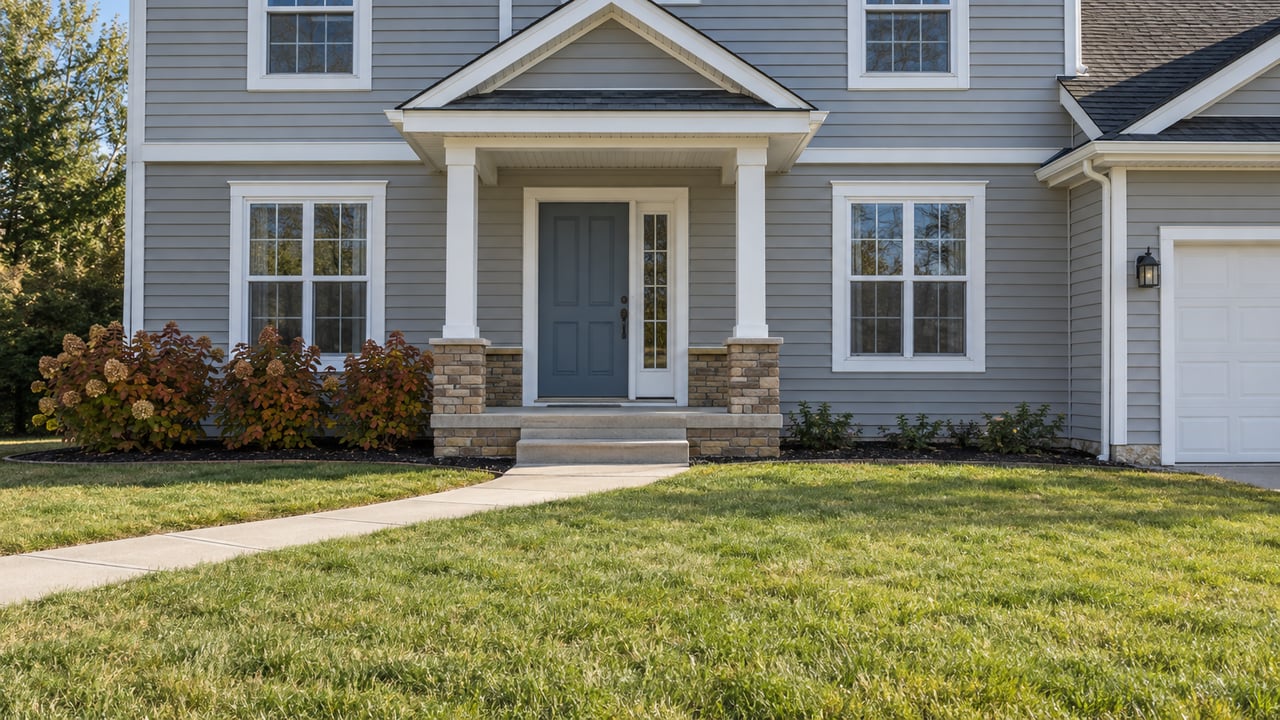
Siding is a clear example of the repair trap. Under the current design standards, hardboard siding "may be maintained in good condition but, when replaced, it should be replaced with a composite siding or other approved material." Routine maintenance that swaps an item for the same item and materials doesn't need an application. Hardboard replacement is not a like-for-like swap under these rules, so a seller replacing worn hardboard before listing is starting an ARB project.
The standards list these approved siding materials:
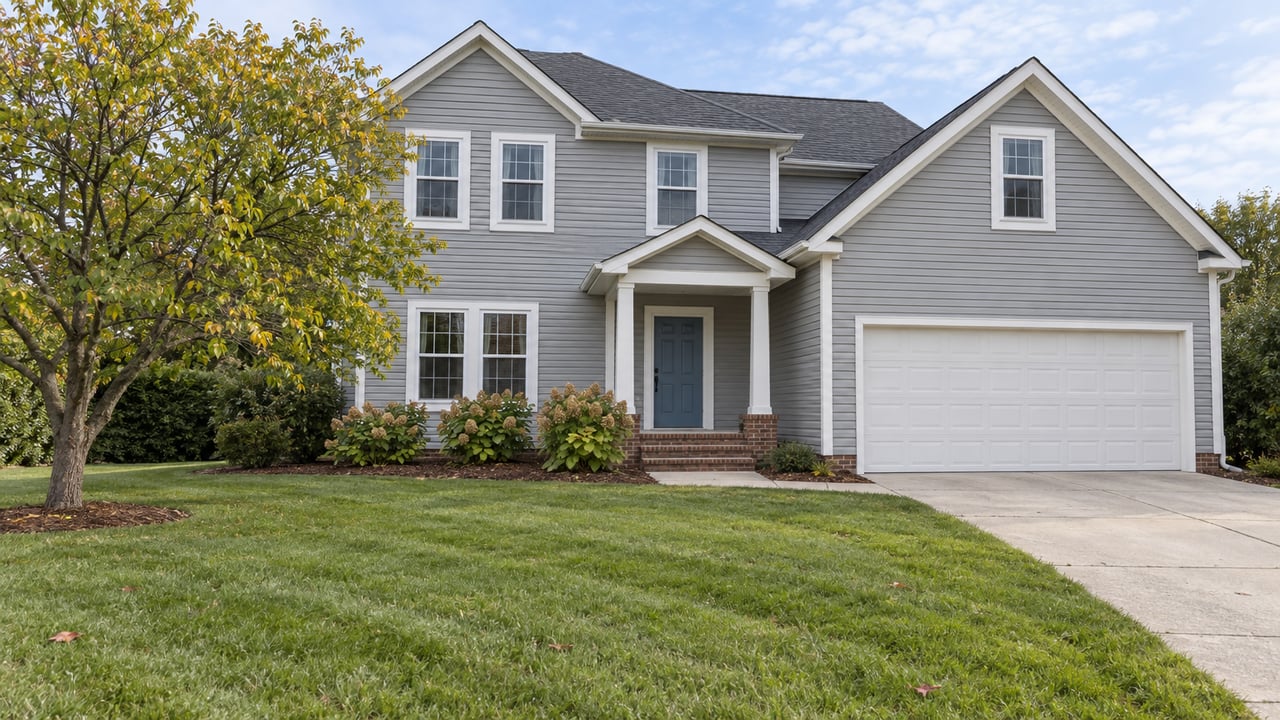
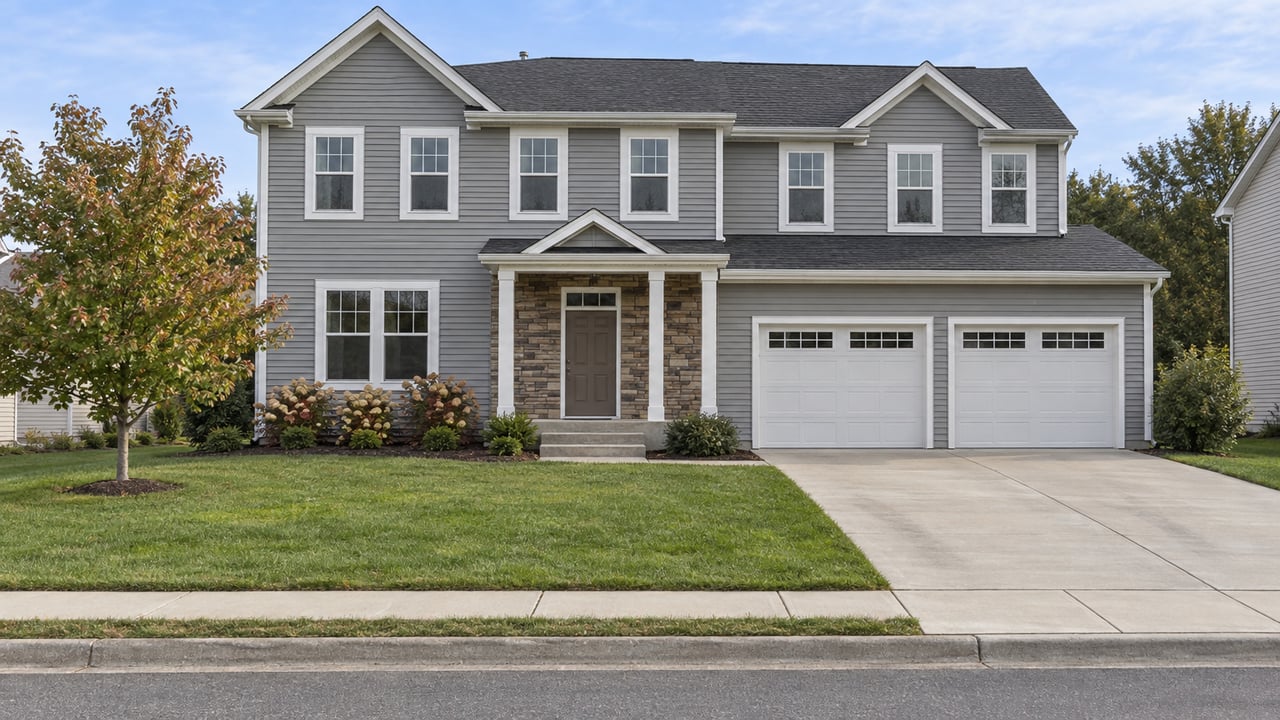
Stucco, metal, cement wall and exposed cinderblock are not allowed. Cedar-shake-style siding is allowed only as a small accent, such as on a gable. Brandermill has no restricted color list. Siding colors should be muted and in harmony with the woodland setting, and a neighboring home may not use the same or a similar scheme. If you plan to repaint before photos, that neighbor rule needs a quick walk down the street.
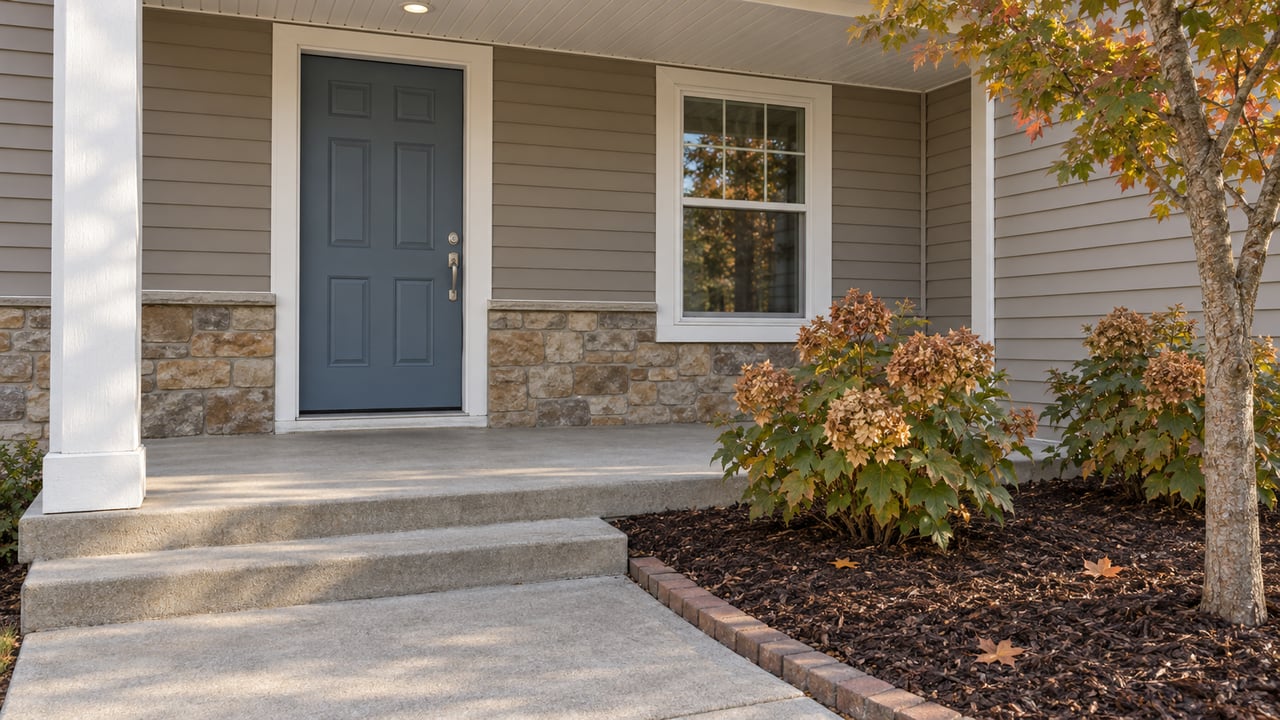
The BCA publishes a property preparation checklist for sellers. Some items take a free Saturday. Others need a written approval that only comes after a meeting. The table sorts them by that difference, using the standards' own triggers.
| Checklist item | What it usually takes |
|---|---|
| Mold and dirt cleaned from siding, driveway, mailbox and roof | Cleaning, no application |
| Landscaping beds edged | Yard work, no application |
| Chipping paint repaired or repainted | Same-color repaint counts as maintenance. A new color goes to the ARB |
| Road-facing wooden step risers painted | Paint, no application |
| Trash and recycling cans enclosed or screened | A new enclosure is an exterior change and goes to the ARB |
| Screening under porches higher than 12 inches | New screening is an exterior change and goes to the ARB |
| Foundation plants along the front of the house | The standards call for front foundation beds with at least two permanent shrubs |
| Hard-surface front walk, since asphalt is prohibited | Replacing a walk is a modification and goes to the ARB |
| Every past modification that required approval was ARB-approved | Documentation from the BCA office, or a new application. Like-for-like routine maintenance never needed one |
The mailbox is the one structural item with a shortcut. If it meets the spec, it needs no application. That means post-mounted steel, painted gloss black, extra large only, Model ST200B00 or ST200BAM, with the red flag, a gloss-black 45-degree cap on the 4-by-4 post, and the post painted Essex Green. A flat-black box doesn't qualify.
Trees follow their own rules. You can limb a tree without approval as long as you remove no more than 25 percent of its leaf area. Removing a tree at or above the six-inch threshold, measured two feet off the ground, needs the association's prior approval. Ask the BCA office how that six inches is measured before anyone starts a saw. On the tree removal application, Brandermill says it reviews requests within two to three business days after the trees are marked. It looks at trees within 15 feet of a structure, trees leaning toward one, dead or diseased trees, and removals that won't substantially change how the yard looks.
According to the standards, the ARB meets on the second and fourth Tuesdays of each month at 3:30 p.m. at the BCA office. A complete application has to arrive by 5 p.m. on the Monday eight days before a meeting. Incomplete applications don't go to the board at all. Written decisions can take up to ten business days after the meeting, and there are no verbal decisions. The BCA recommends applying at least 30 days before your planned start.
Starting from today, here are the remaining 2026 cycles:
Projects must be completed within three months of the approval date, and an approval expires if work hasn't started in that window. When the work is finished, the owner notifies the BCA office, sends photos and has an on-site final inspection. Owners in Gleneagles, Muirfield Green Townhomes, Spinnaker Cove Condos, The Townhomes at Harbour Pointe, Woodbridge Crossing and The Greens at Woodbridge Crossing add one more step, because they need their sub-association's approval before applying to the Brandermill ARB.
Put those steps together and a siding or walkway project for a spring listing really starts in late fall. The application, the meeting, the written decision, the contractor's schedule, the final inspection and only then the resale packet each take their turn. If you order the packet first and fix things afterward, the violation report reflects the house before the work, and an optional re-inspection reordered through WelcomeLink is how the report gets updated.
Do I order the resale packet myself? Yes. You register with FirstService at WelcomeLink and order it there. Questions go to the BCA Compliance Manager at 804-744-1035, ext. 3001.
What if the ARB never answers my application? The standards set a backstop. If no written decision comes within 30 days of a completed packet, the owner sends written notice to the ARB. If there's still no decision 15 days after that, the plans are deemed approved.
Can I appeal a decline? Yes, in writing, within 30 days of the decision, first to the ARB and then to the Board of Directors. The board's decision is final.
This post is general information, not legal advice. Your own deed, sub-association documents and situation may differ, so confirm the details with the BCA and a qualified real estate attorney before acting on them.
At Pretty Properties, we include an exterior walk-through against the Brandermill checklist in our pre-list inspections, so ARB projects get scheduled before the Compliance Specialist arrives and not after. If you're thinking about a spring sale, request a free home valuation and we'll go through the November and December ARB deadlines with you.
Stay up to date on the latest real estate trends.
Partner with a team that delivers clarity, strategy, and commitment elevating your journey with a level of service you can feel.